by Gloria Casney |Department Head Hair
and by Luisa Abel | Department Head Make-up
Photos by Melinda Sue Gordon/Universal Pictures
HAIR
Classic, Not Historic
Our hair journey for Christopher Nolan’s The Odyssey can best be described by a quote from the film’s costume designer, Ellen Mirojnick: “Classic, not historic.” And writer-director Chris Nolan’s direction to us was that the look should be “grounded.” This became the bottom line of our work: classic and grounded.
As I started researching the Bronze Age, all I found were complicated hair styles with obvious hair and wig additions. Hair was a large part of this era. They actually had metal curling irons 3,000 years ago! Aided by stylist Ahou Mofid, I copied statues as exact as possible to get a feel of the period, and although we kept the styles simple and understated for the film, we did end up creating some of the more elaborate styles on background actors at the Sparta Castle of Menelaus and for the homecoming scene of Agamemnon.
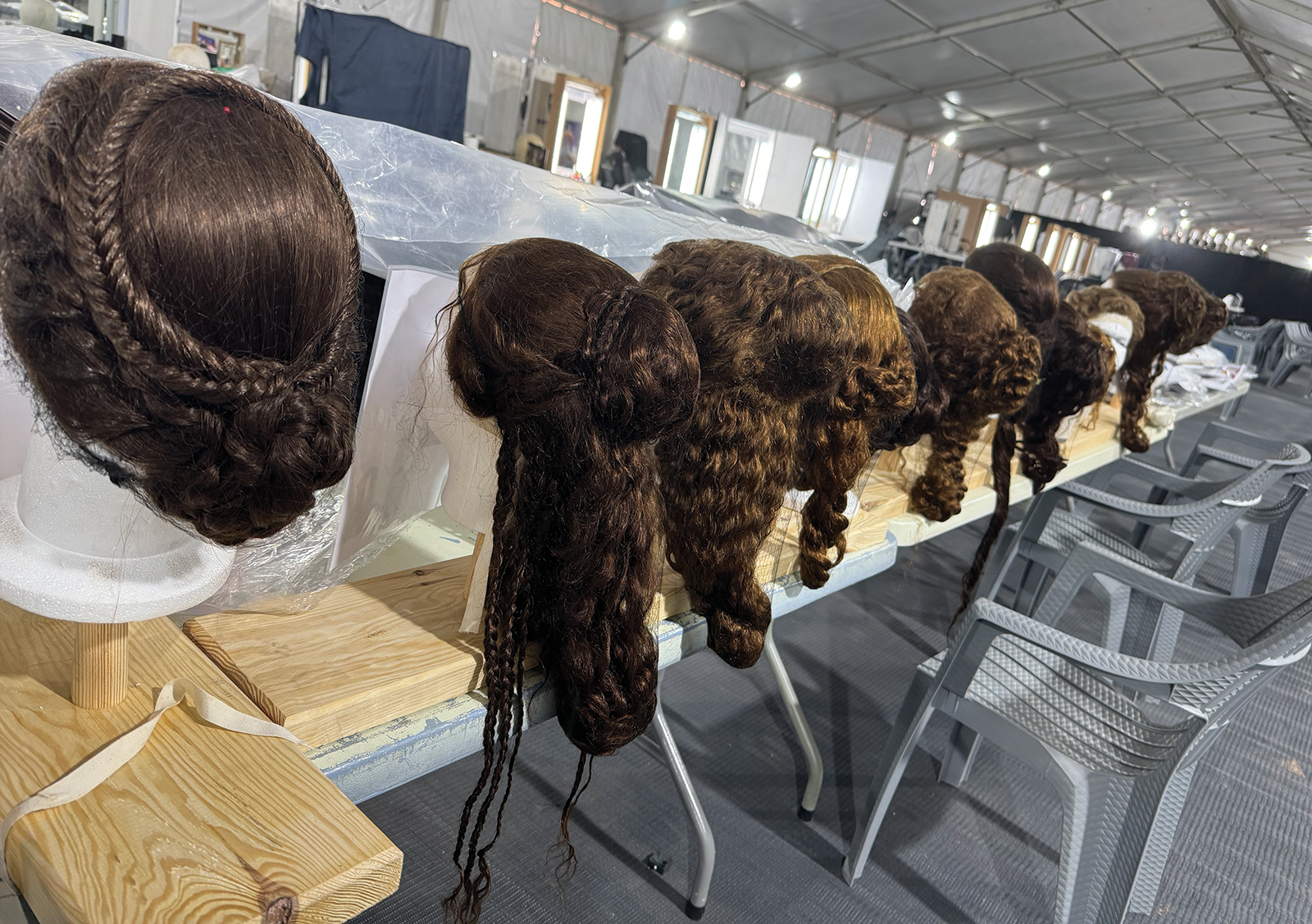
For the characters at Odysseus’s Ithaca castle, we kept everyone understated, with the female servants having simple braided updos, reflecting the elegant simplicity of their queen, Penelope (Anne Hathaway). The suitors had a variety of shorter hair styles and beards, conforming to styles of that era—5th- and 6th-century Greece.
For Odysseus’s crew, we used Argan oil and waxes daily, adding combined brown pigment and watered-down hair gel for the men inside the Trojan Horse.
Styling Globally, Working Locally
With filming scheduled across multiple continents, our team worked simultaneously in several locations. Assistant head of hair Rox Hodenfield and stylist Nikki Wright were based with me out of the U.S.; stylist Peter Nicastro, background hair supervisor Ferdinando Merolla, and background key hair stylist Francesca Scalera joined us in Europe, going ahead to each location for prep and fittings. We traveled with a mostly Italian crew and added locals in each country.
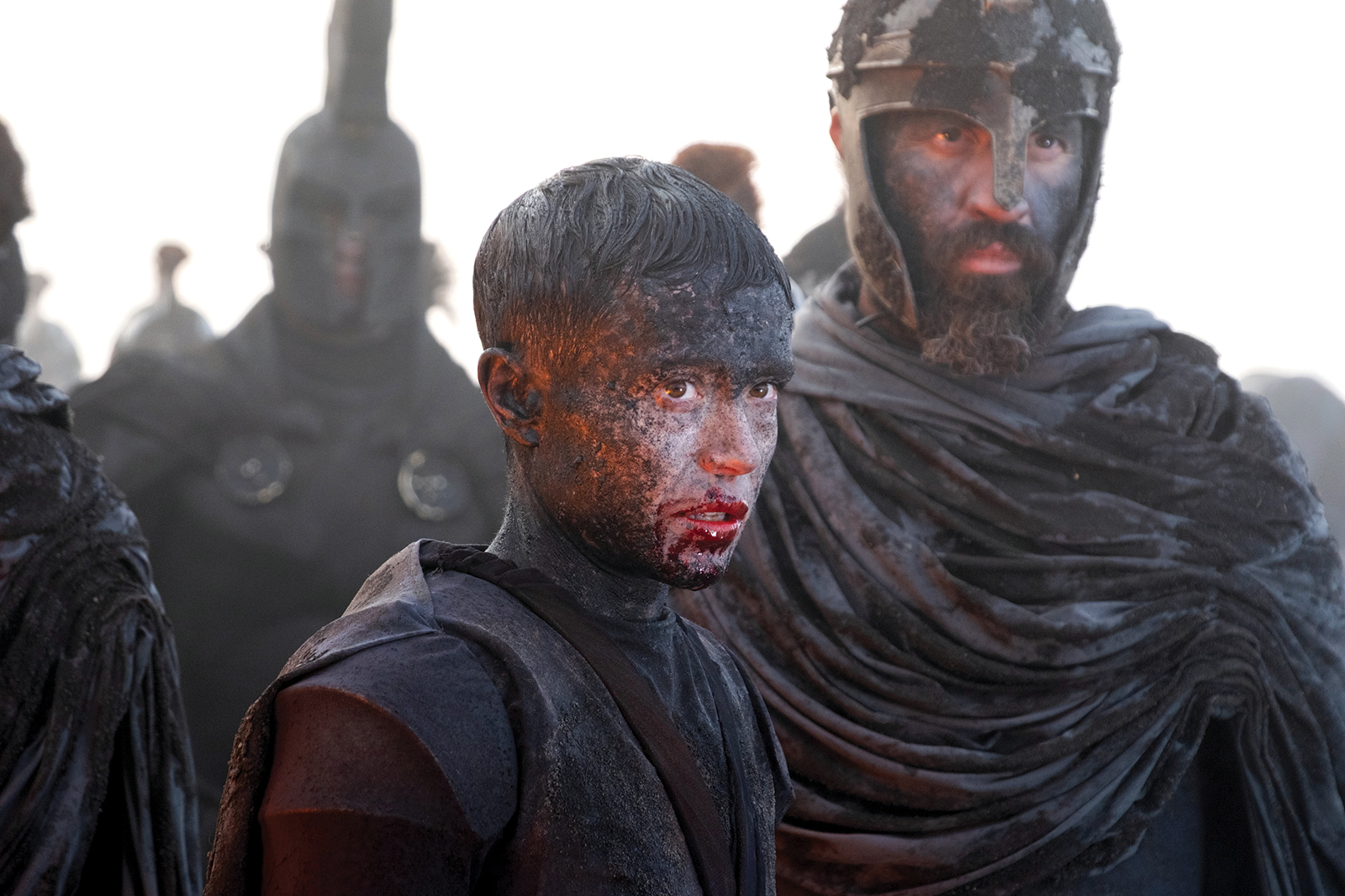
In Iceland, Peter and Ferdinando worked on creating hair gel combined with black pigment and black sand to match the make-up of the 400 Shades for Hades. We constantly Zoomed during the process, while Rox and I worked on and tested backup methods from the U.S.
For key Ithaca scenes in the United States, we were joined in the trailer by stylists Lucia Mace and Cheryl Daniels and for the universal water work, we had Meghan Heaney and Miki Caporusso in the trailer, with Arleen Chavez running background at both locations.
Not Wigless
Chris Nolan is famously anti-wig, of which I was aware, and in high winds and extreme conditions, completely grateful for.
There were a couple of extenuating circumstances. For Eumaeus (John Leguizamo), who was bleached to the maxim level, I could not, in good conscious, paint dark pigment on that hair follicle. It would never have come out without distressing the hair shaft. So, for his middle-aged look, I used a customized salt-and-pepper wig from my kit.
For the maid, Eurycleia (Kate Fuglei), who was blessed with extremely thick red hair, we needed to age her 20 years on set because she was working young-to-old in back-to-back scenes. Rox Hodenfield and I kept adding gray hair extensions and painting, but it was never enough. So eventually, producer Emma Thomas suggested a white wig. We transported a John Blake wig, via a cable and pulley system, up to the castle location. As camera was waiting, I maniacally thinned and styled the wig, while Rox did a quick wig wrap! The character was sweaty and distressed in the scene, so messy was good. Thankfully, surprisingly, Chris Nolan approved it and didn’t say, “It looks like a wig.” Praise to Zeus
We also used lots of braids and wigs for the background actors, which some days numbered as high as 1,100 to 1,300.
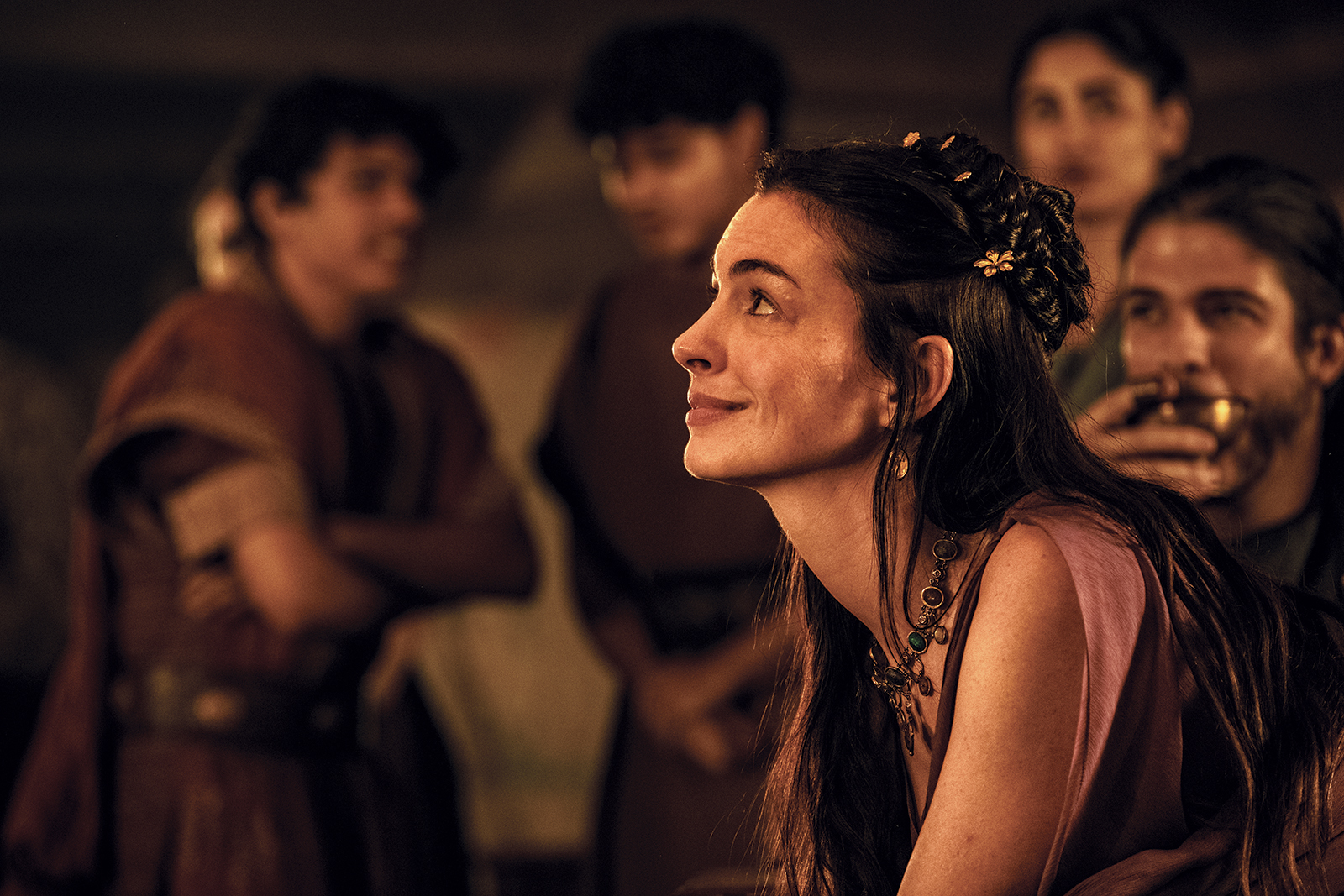
Odysseus and Penelope
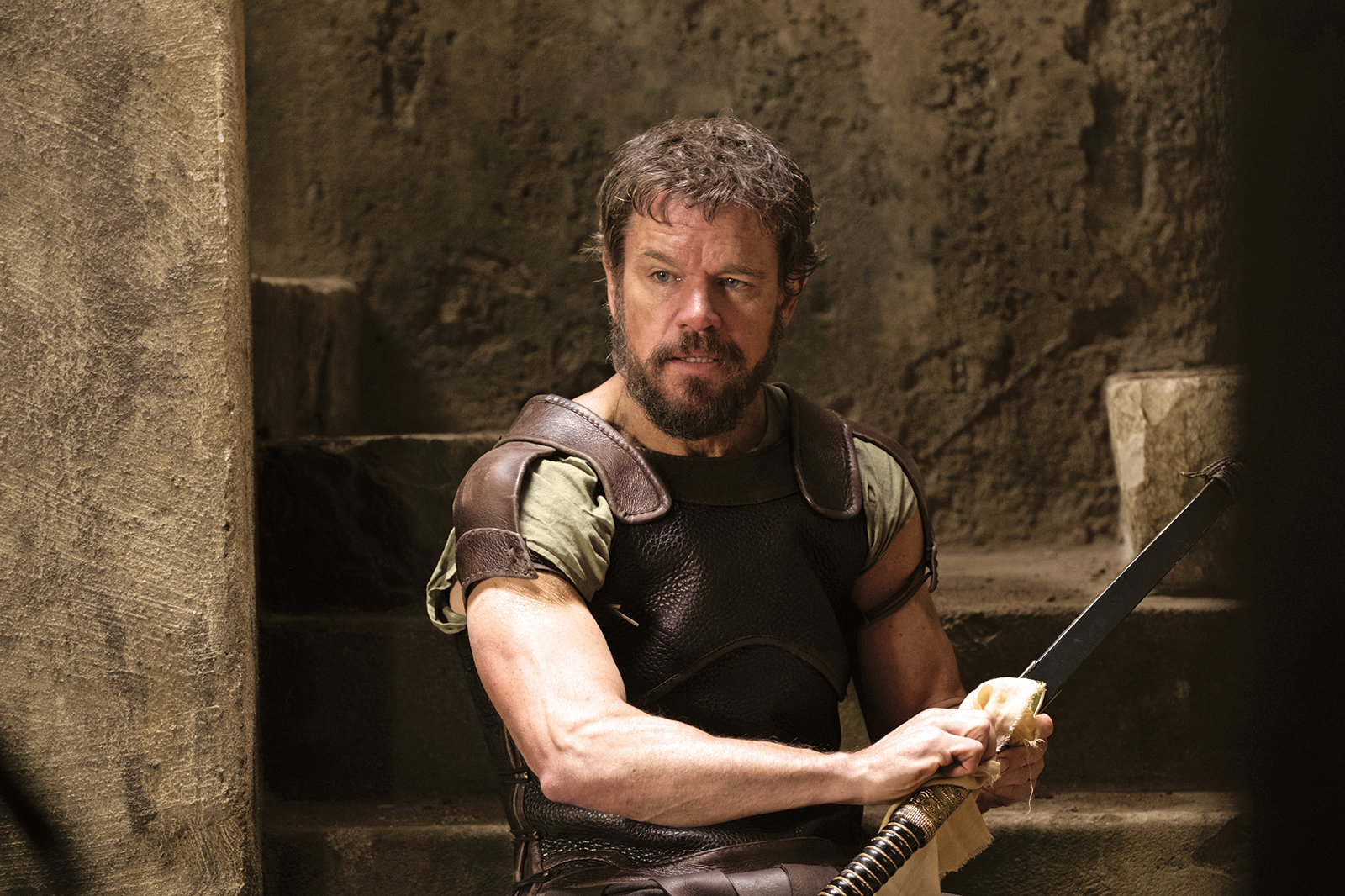
For Odysseus (Matt Damon), we had three stages for the hair. For the youngest stage, we airbrushed his hair with European Body Art (EBA). For the second look, we used Matt’s own hair color dressed with tons of Argan oil and soft waxes. For the oldest look, we laid loose gray hair into the top of his head with Telesis adhesive and blue-taped in gray hair on his sides and back.
For Penelope (Anne Hathaway), her youngest look was Anne’s own hair, half up-braided with period-correct hair pins and small brass flowers. Combinations of braids were used with her own hair for her older looks.
Telemachus
For Telemachus (Tom Holland), he had great naturally curly hair that Rox Hodenfeld styled daily with R+Co mousse and Argan oil.
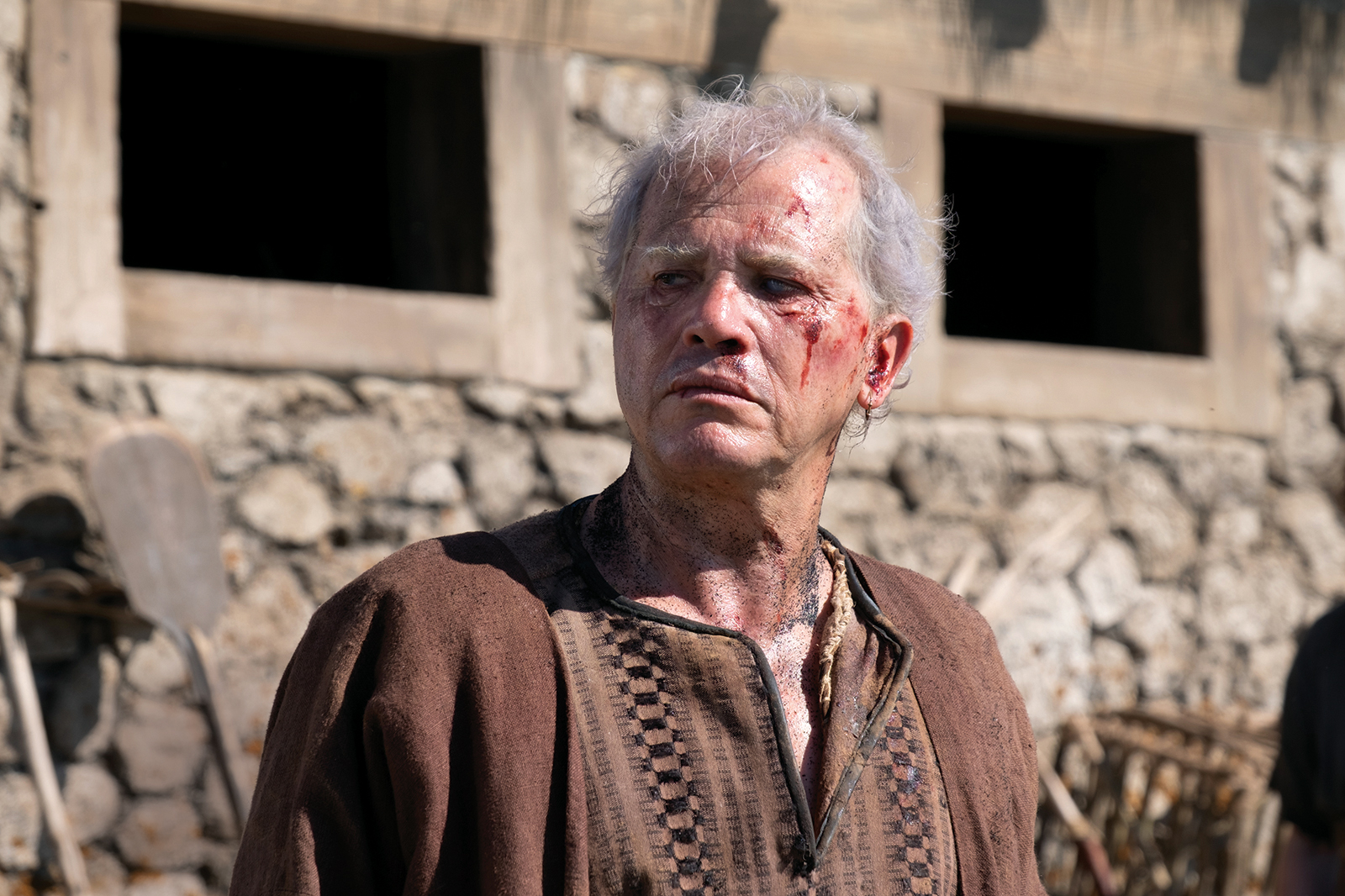
Eumaeus
For Eumaeus (John Leguizamo), the hair was a literal journey. John came to Morocco for his fitting, where Chris Nolan took one look at his black, dyed hair and said, “I want his hair white.” John lived in New York, so I sent him to a salon there for the initial bleaching. He showed up in Italy with dark smoky roots and silver ends, so we had to re-bleach him. It, of course, came up to be a bright yellow. I was terrified we would break his hair off if we did anything further, so I employed my savior, Fanola purple shampoo. We also used water-based paint pens in off-white and silver to further correct the color. When we got to Los Angeles, after giving the hair four weeks of rest and conditioning, I managed to bleach it up to perfect white. John’s home regimen included Olaplex leave-in conditioner No. 5 and Kerastase Blond Absolu Anti-Brass purple shampoo.
Helen and Clytemnestra
Helen and Clytemnestra were both played by Lupita Nyong’o. For Helen, Lupita’s sister supervised the making of 50-inch sister locks in Kenya. Working with those, I designed two looks: one with gold thread twisted through the locks with brass clamps, the second with pearls on gold thread through the lengths. I devised a latch-hook application to attach the longer locks to Lupita’s own bob-length hair. Nikki Wright applied her hair daily.
For Clytemnestra, we used the same latch-hook method with open hair in two lengths for two time periods. I added an ancient-style bird hair accessory to reflect Clytemnestra’s goal of freedom, which also complemented the design of Agamemnon’s helmet.
It took more than one village to complete this odyssey. Thank you to all our Local 706ers who came aboard to rock Ithaca and the storm. • –Gloria Casny
MAKE-UP
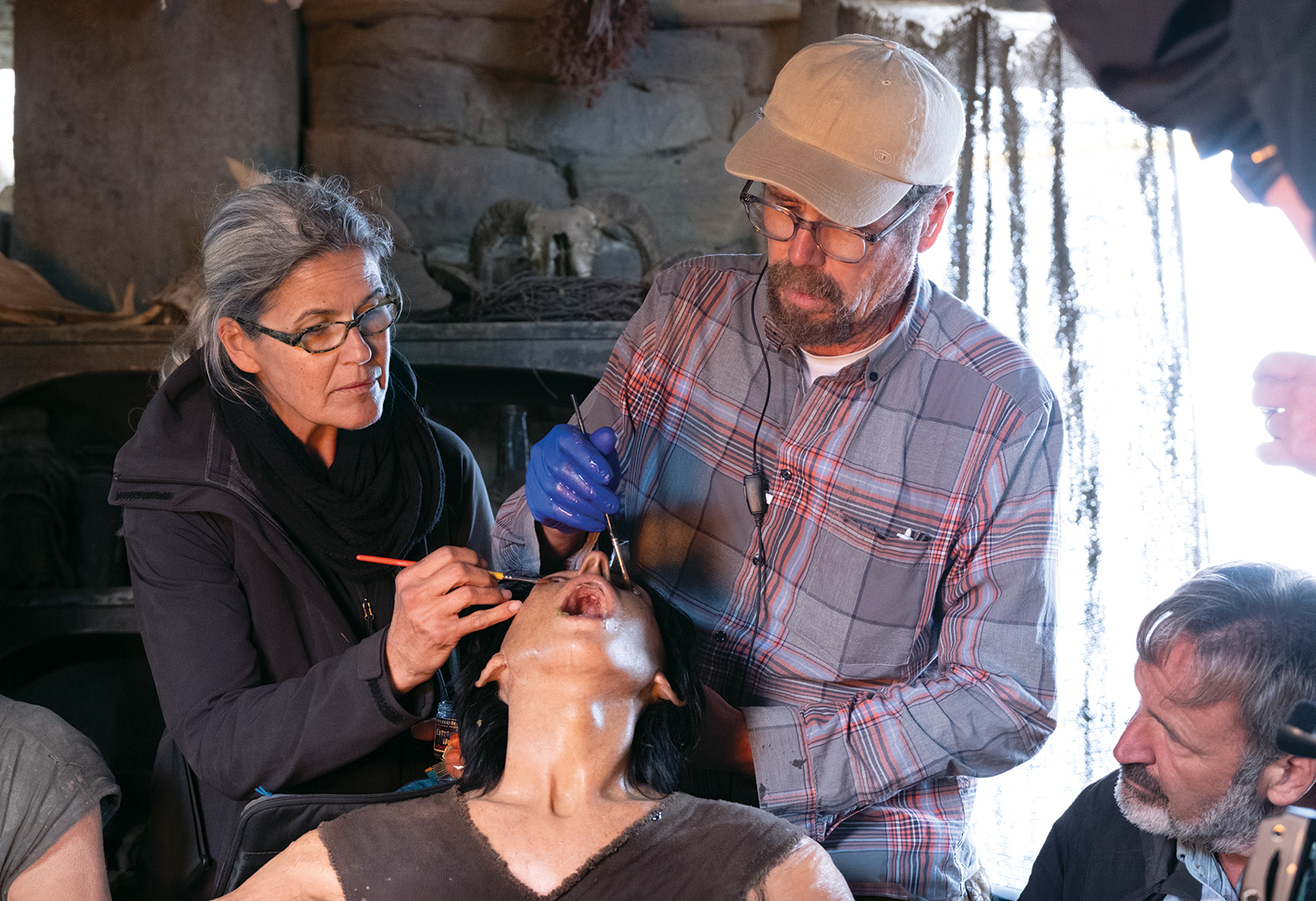
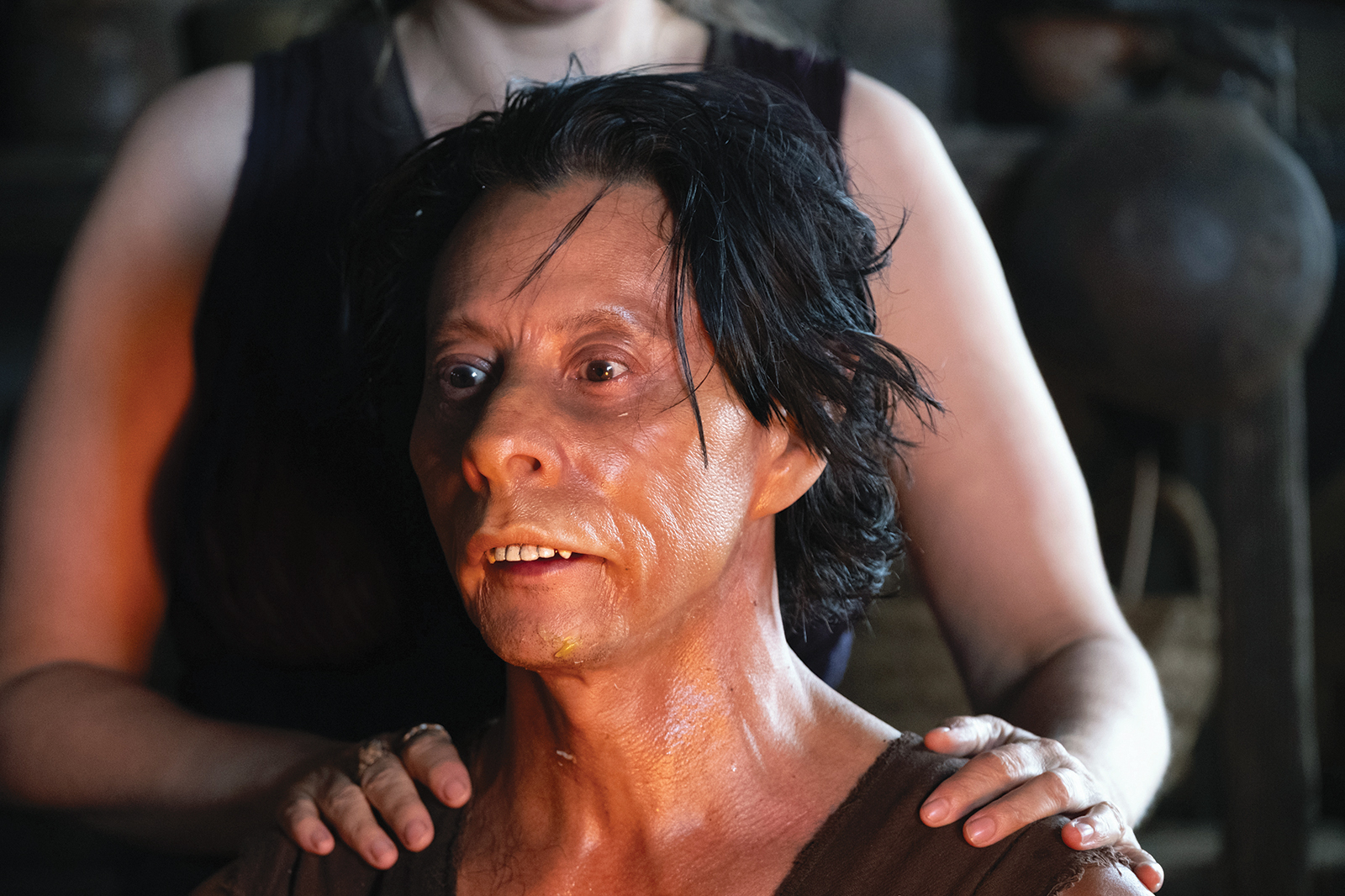
Director Christopher Nolan wanted the film to feel realistic, raw, and accessible. That ambition shaped every aspect of the make-up design. Although The Odyssey is rooted in mythology, the characters needed to feel physically and emotionally recognizable. They had to look as though they had lived through the world depicted on screen—not simply been placed inside a fantasy landscape.
I had studied Greek mythology and understood the scale of the undertaking. Shooting on IMAX®, across multiple countries and in demanding natural environments, meant that every detail would be visible.
Edges, texture, color transitions and hair work all had to be precise. Working with director of photography Hoyte van Hoytema, we adjusted colors, textures, and applications to ensure that the make-up translated correctly on camera. The project required almost every skill set a film make-up artist can bring to a production: prosthetics, character make-up, aging, tattoo coverage, women’s make-up and beard laying.
Chris was committed to shooting practically, often in the elements and on ships. From the beginning, I knew the designs had to be detailed and adaptable. We needed to work quickly wherever we were, without compromising the visual language of the film.
Researching the World
I spent months researching how people of that period might have lived and looked. Much of the research came from pottery, stonework, sculptures and other artifacts. These sources helped inform everything from grooming and hair to skin texture and overall character appearance. I also studied historical and artistic interpretations of Homer’s The Odyssey.
The aim was not to reproduce a particular historical image, but to create a world that felt authentic and relatable to a contemporary audience. Every character undergoes some form of journey in the film. By changing the character age, grooming, facial hair, and physical condition, we were able to communicate the passage of time and the effect of their experiences. The make-up was not simply decorative; it became part of the narrative.
Odysseus
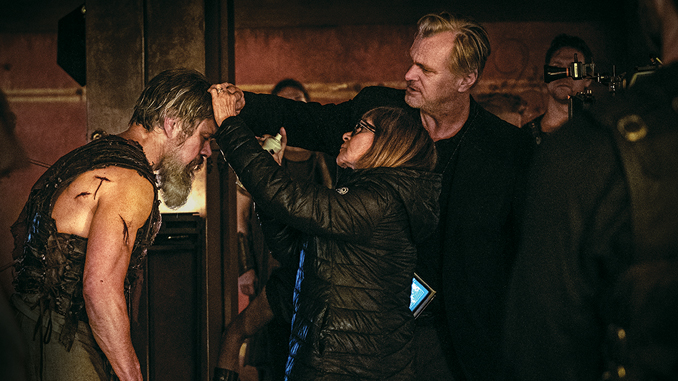
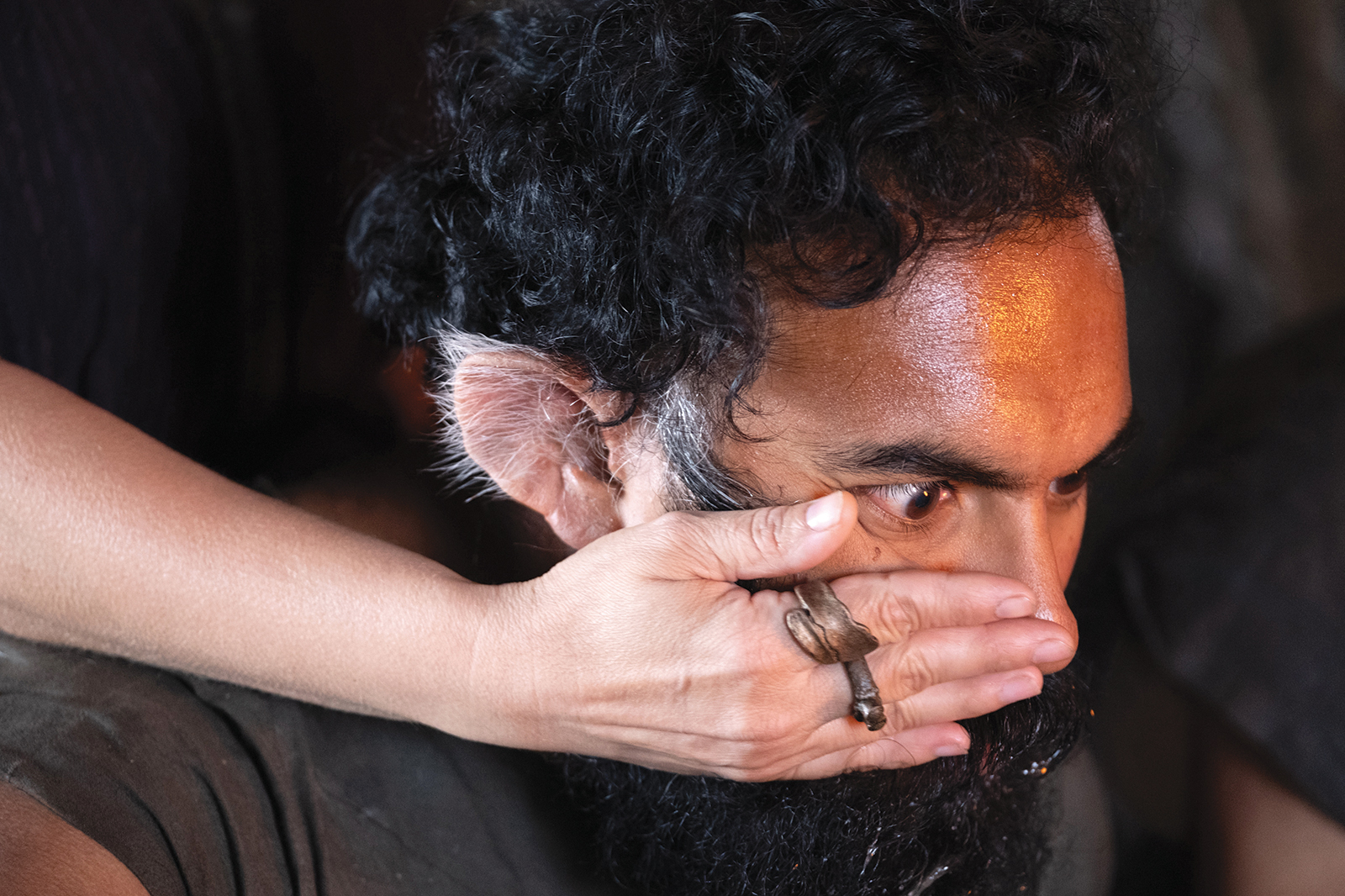
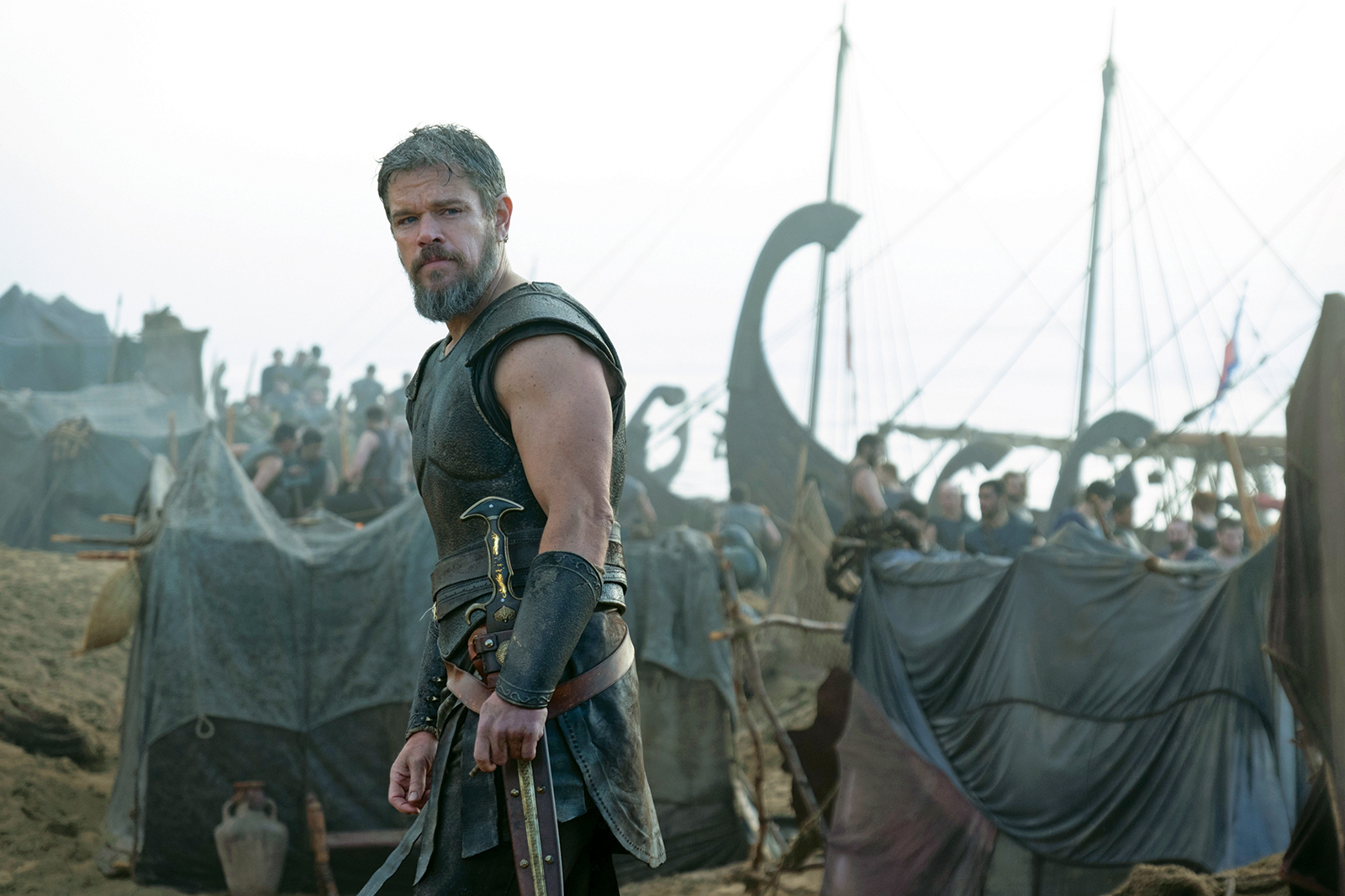
For Odysseus, played by Matt Damon, the beard was a key element. It required careful continuity because the character moves between different environments and time periods. To achieve four distinct stages of Odysseus’s life, I designed a progression for Chris Nolan to review. For the two younger looks, we primarily used Matt’s own beard as the foundation. This helped keep the character natural and grounded. As Odysseus aged, we built on that base with subtle laid-on hair work. For the older version, I created a new extension technique to achieve a more weathered appearance. The work had to withstand seawater, high winds, armor, friction, and long periods when we did not have direct access to the actors. In addition to the beard, Matt’s look included facial and leg scarring, as well as aging make-up.
Practical Effects and Transformation
The Cyclops’ skin texture, color, and mud design came from a technical approach I had used previously and were custom-made for the film. We carried out tests to create a realistic-scaled effect on Bill Irwin using Bondo prosthetic pieces made by Conor O’Sullivan, aging products, a custom skin base tone, and specially formulated mud products. Conor then created digital models of Bill using make-up tests, body scans and digital sculpts by Jamie O’Hara.
For the Circe sequence, Conor designed and created the interim pig prosthetics, which our make-up team applied, as well as previously unseen animatronic elements that allowed Odysseus’s crew to transform into pigs entirely practically.
Color, Dirt, and Continuity
After creating color boards for each sequence, I charted the tones needed to distinguish the different storylines and emphasize the changing environments. We then developed custom sand, dirt, soot, and mud colors for use throughout the film. Every actor and background performer received varying levels of ingrained dirt. This was a huge undertaking in Troy, where the make-up needed to suggest a lived-in world. For the Hades and Shades sequences, I worked with costume designer Ellen Mirojnick to create an integrated visual design. For the 400 Shades, including Sinon (Elliot Page) and Agamemnon (Benny Safdie), LuAndra Whitehurst and I used airbrush make-up combined with simulated sand textures to create the face-vignette effect that Chris Nolan wanted. For Lupita Nyong’o, who played Helen and Clytemnestra, I collaborated with Jason Hamer at Hamer FX, who designed and sculpted multiple versions of Helen’s scar. Lupita also had custom-made lenses for both characters.
Working in the Elements
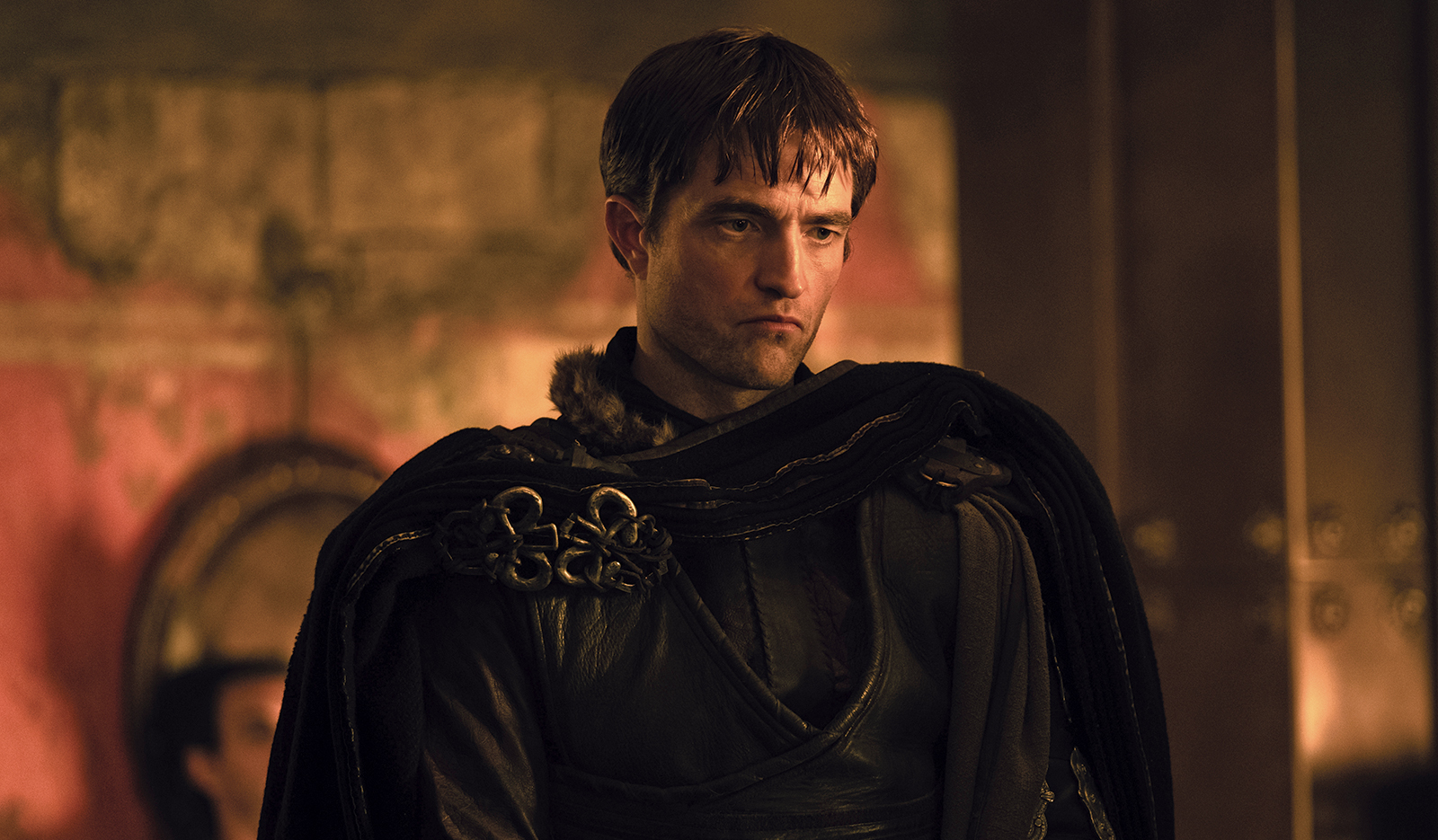
The production rarely offered controlled conditions and traditional products were not always capable of surviving salt water, heavy armor, mountain climbing, rowing sequences, and prolonged weather exposure. Sunscreen protection was a priority, and every product needed to remain waterproof.
In Morocco, we applied prosthetics on a beach while standing knee-deep in the ocean. We worked with beards in winds reaching 30 miles per hour, and in Scotland, prosthetic applications and changeovers took place on a steep hillside.
In Italy, we had to remove the wounds from John Leguizamo’s make-up as Eumaeus—which compromised the aging. This meant completely redoing the aging while John sat on an apple box in a pigpen—with the time crunch of losing the light!
The Scale of Troy
Managing the make-up for the battle in Troy was an enormous undertaking. In Morocco alone, we worked with just under 7,000 background actors. The make-up team included artists from the United States, the United Kingdom, Italy and Morocco. I worked with a core Italian team who were in each country ahead of filming. They handled fittings for every background actor, ensuring that the details of my designs remained accurate to the period. Because of that preparation, we were able to process large numbers of background performers each day. Wounds were added on set, and we created a blood bath on approximately 200 background actors. The scale was extraordinary, but the details mattered. Each person needed to appear as though they belonged to the same world.
The Team Behind the Film
None of this would have been possible without the extraordinary team behind the work. The scale of the production required artists who could move between background, character make-up, prosthetics, aging, beard work, and tattoo coverage while adapting to different countries, environments and challenges.
Our Italian team worked with us throughout the production and played an essential role in maintaining continuity across different countries. Maurizio Nardi led Background everywhere outside of the United States and was also an important part of the character team.
Kerrin Jackson and LuAndra Whitehurst were part of my core team and contributed across every area of the department. During our five weeks of shooting in LA, we were fortunate to have Kevin Wasner, Jamie Kelman, and Leslie Devlin carry a heavy load in the Megaron.
The result was a truly international collaboration, made possible by all the skill, generosity, and resilience of artists working under extraordinary conditions. I am deeply grateful to all our teams. • –Luisa Abel