
by Adam Brandy and John Rizzo
Photos courtesy of Warner bros.
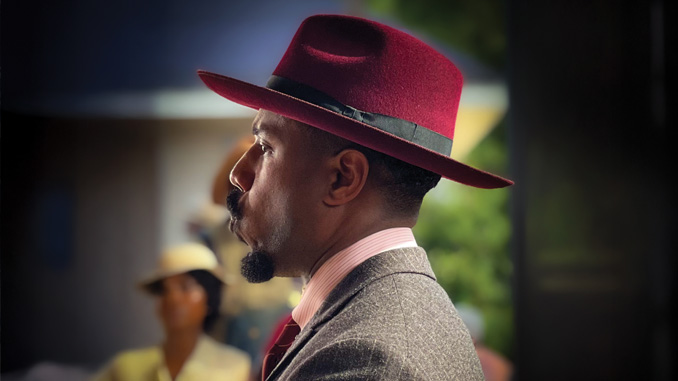
For Ryan Coogler’s most personal piece of filmmaking yet, the complex and layered Sinners, there were many early discussions about setting, and how best to bring the complicated history of a region that was a melting pot of cultures to life on screen. Servicing the make-up and hair needs in particular, presented intricate challenges but also provided fertile ground to create something truly extraordinary.
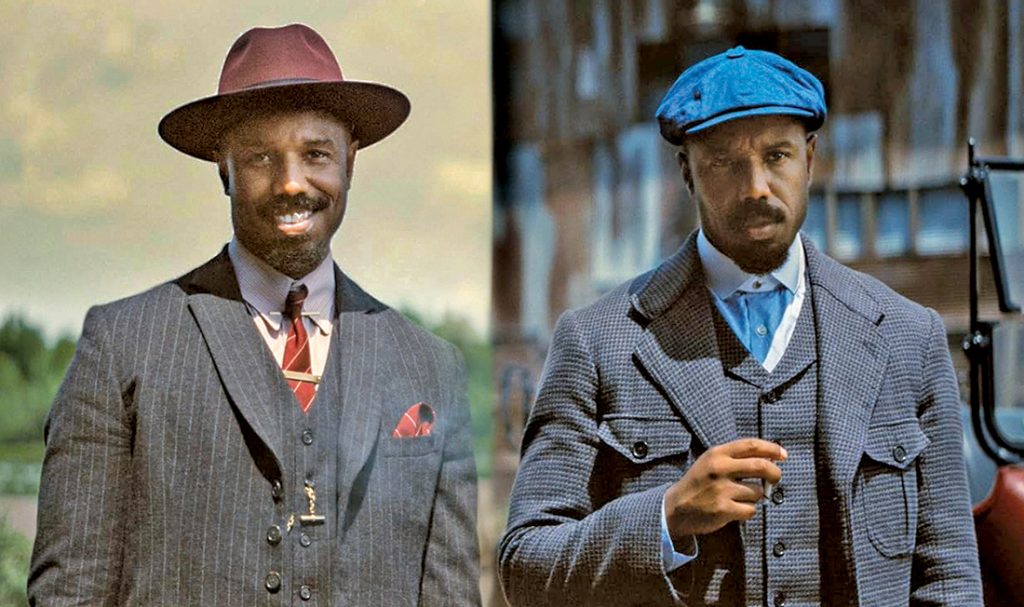
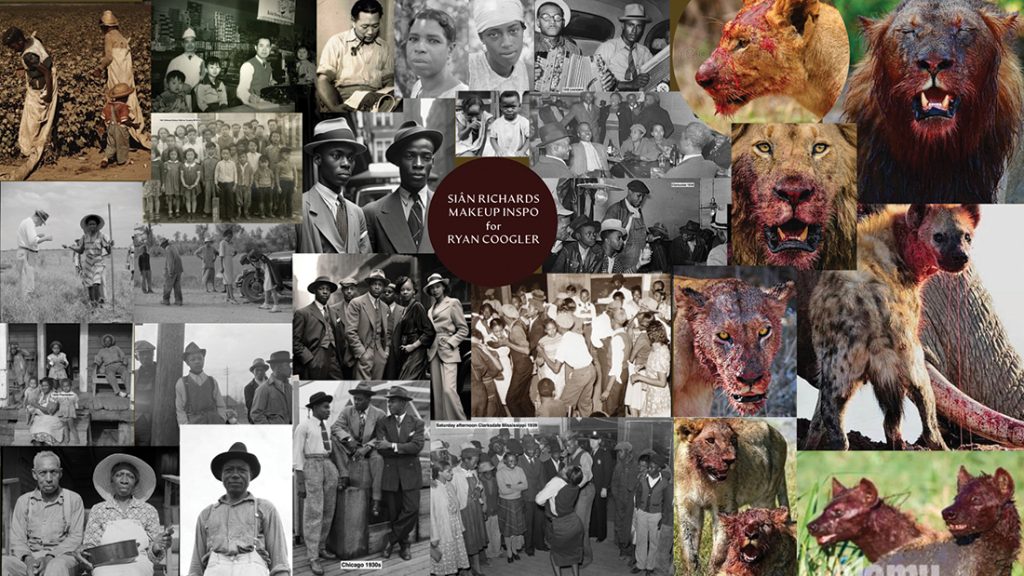
Make-up designer Siân Richards began this project with an impressive amount of pre-production work for the principles and background in advance, assembling some amazing mood boards that set the tone for the film’s overall look. All this work would give honesty in the time capsule of the 1930’s Mississippi Delta. Ken Diaz was brought on later as Department Head Make-up.
Both of these celebrated Local 706 artists had worked with Coogler on Black Panther, so they were very excited to be part of his ambitious period project told through a Southern Gothic lens.
Richards was also Michael B. Jordan’s personal make-up artist. The actor playing the dual roles of twin brothers, Smoke and Stack, and her work helping to visually differentiate each distinct role was a masterclass in the art of subtlety. The challenge of changes, sometimes several in a day, meant that she needed to apply color palettes that would define each brother’s look fast, and without costing the production time and money. Something Richards handled with great success.
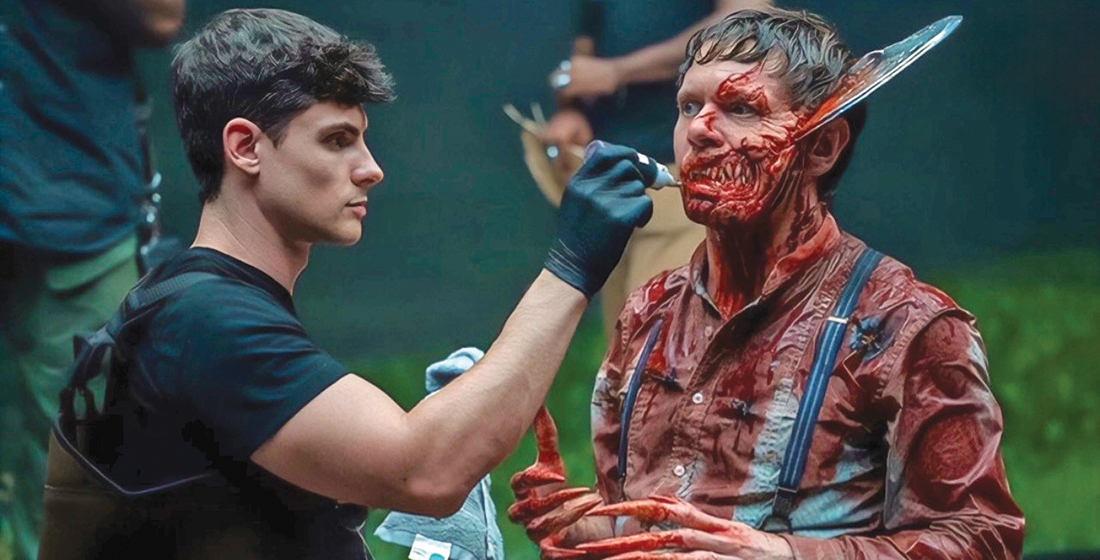
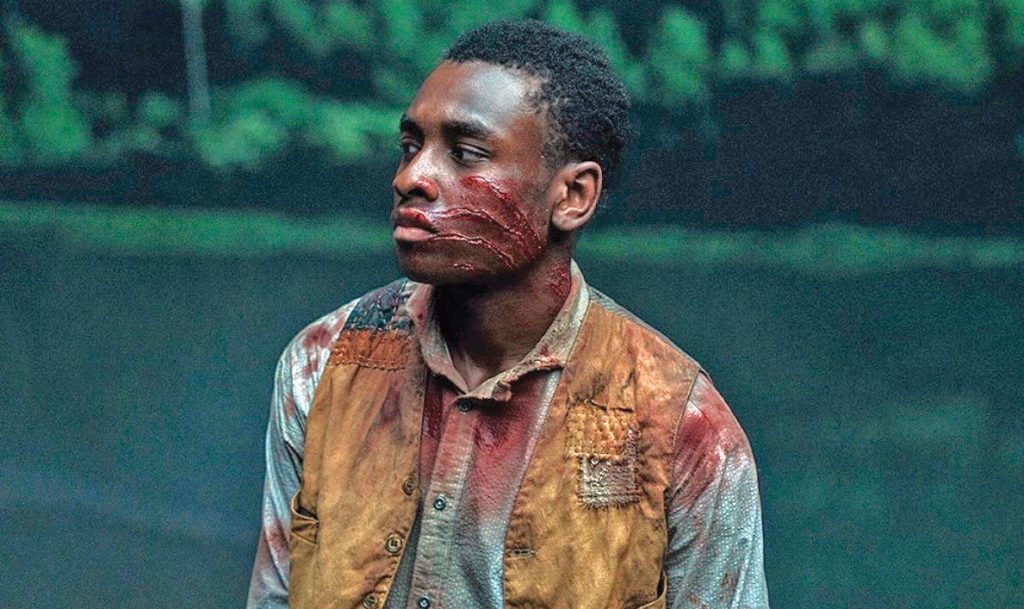
But other things needed to be locked down. The look of the blood on camera also needed to be addressed. After some initial visibility issues, Diaz and Oscar-nominated prosthetic make-up designer Mike Fontaine, along with his right-hand man, Kevin Wasner, worked to determine the optimal combination of products that would be most visible in low light and on darker skin tones, while maintaining continuity. This was achieved by applying a mixture of bright and dark products that would look wet but not run off the skin.
The upcoming scenes would require many gallons of pumping blood. Wasner created a custom stage blood, starting with the old Dick Smith formula but adding more zinc oxide to make it brighter and opaque.
Another challenge that needed to be overcome was Coogler’s insistence that the vampires have tapetum lucidum, that eerie and highly reflective eyeshine seen in predatory animals at night. Everyone involved wanted this effect to be achieved practically, if possible, so Richards and Fontaine put in a call to Cristina Patterson, one of the industry’s premier contact lens painters.
To their amazement, she revealed she had been secretly developing that exact effect and was on the verge of perfecting it. Patterson created the first sets for Michael B. Jordan and Hailee Steinfeld’s screen tests, and the results were astonishing.
Sinners became the first film to feature this innovation, and by the end of the project, lenses were created for nearly every principal cast member, each with their own distinct color and design. Seeing those eyes glow back at you in the dark was both haunting and mesmerizing.
The eyes of the vampires being settled, it was time to address their fangs. Coogler wanted something that was anchored in reality. So, Fontaine returned to the natural world for inspiration. With predatory animals once again the guide, they arrived at a design for the fangs that curved backward, like big hooks. These vampires could latch onto their victims, and the result was these fangs would inflict some very distinct wounds that went far beyond the typical small puncture marks most commonly seen in other media.
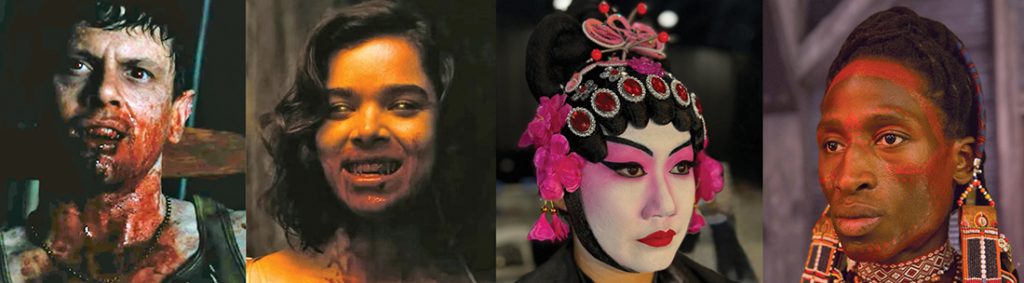
The next challenge was to develop designs for the wide assortment of character make-up required for the Juke Joint dance floor montage scenes that gave life to a diverse range of spiritual ancestors and descendants.
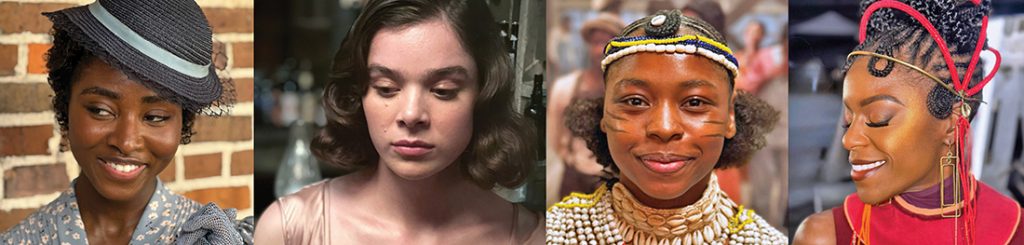
Diaz told us that extensive research is always his most important first step when designing any make-up. Fortunately, Richards also believes in that, and she compiled many research images and multiple inspiration boards based on historical and natural world images before he started the project.
Two-time Academy Award-winning costume designer Ruth E. Carter also shared with Diaz her extensive collection of research images and walked him through the rows of costume choices she was considering for each of the montage’s 24 characters.
Diaz selected elements from both Richards and Carter’s research, in addition to some of his own, when designing the make-up looks for the montage scene. Two of the more elaborate characters would be the traditional Chinese Opera Water Sleeves Dancer, and the Chinese literary character, the Monkey King.
Three tests were done for the Water Sleeves Dancer make-up. The first test, Diaz used to determine the combination of make-up elements selected from the assorted research images to see what worked best with dancers, Winnie Mu’s facial structure, and to determine which colors would best complement Ruth’s costume choice.
For the second test, they experimented with various foundations, cream and powder blushes, as well as different eyeliner angles and eyebrow shapes. And, for the third test, the design and products used were finalized, including a custom-made cream blusher, color-matched to the powder blusher to be applied on top.
Make-up artist Alana Hogg worked with Diaz for the second and third tests. Diaz was extremely pleased with the results and delegated the application to Alana for the day of the shoot, thus freeing him up to oversee the looks of all the other montage’s spirit make-up applications.
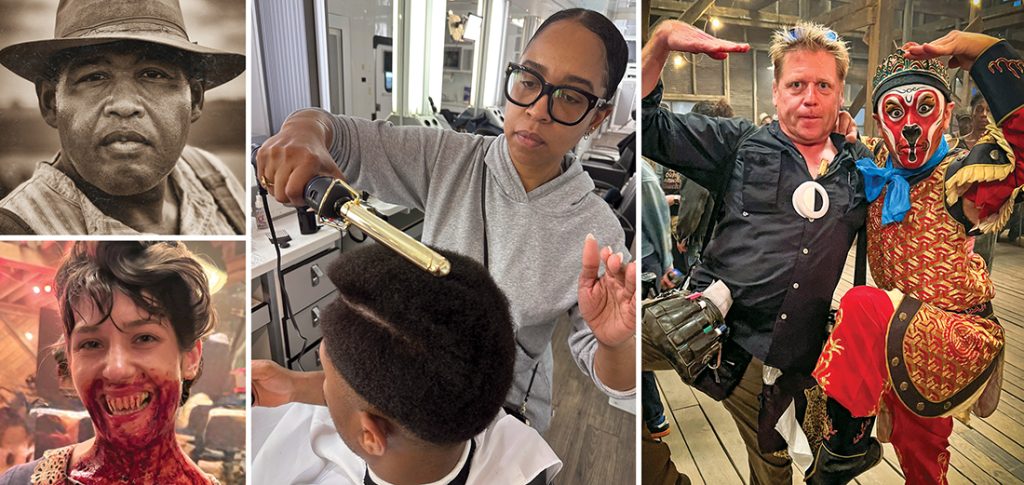
During the early stages of production, Make-up Department Head assistant and artistically gifted Local 706 member Ned Neidhardt, began preliminary designs for the Monkey King make-up working from Richards’ research and inspiration boards using ProCreate. Over the dancer Alexander Huynh’s headshot, Ned worked out the design elements that complement his facial features.
For the test make-up, Ned used white Endura to map out the design outlines and cover the forehead, anticipating the rubbing of the headpiece. The rest of the painting was completed with Kryolan aqua colors, utilizing Michael Davy’s Silicolor as the mixing medium to achieve a stronger hold. On the shoot day, Ned made slight design adjustments to accommodate the contours of Alexander’s face better.
Diaz wanted to give all the ancestors and descendants a subtle spirit-like look to distinguish them from the others at the Juke Joint, so the team incorporated a gold iridescence powder into their face and body make-up. It is these little bits of production value that really tied things together.
And, speaking of tying things together, none of this amazing make-up work would be complete without an equally amazing hair department.
Coogler wanted the characters to feel like real people who had lived and loved in the Delta. Hair styles needed to reflect the grit of daily life while showing pride in personal appearance, especially for the Juke Joint scenes.
To this respect, Richards and Diaz wholeheartedly sing the praises of hair designer Shunika Terry-Jennings. She delivered art that not only complemented the make-up, but in many cases, helped sell the make-up as well.
Research grounded everything designed for the film. Shunika studied photographs and writings of Delta Blues musicians, Mississippi Choctaw communities, sharecroppers, and the Mississippi Delta Chinese community. These references gave her inspiration and responsibility: to design hair that was specific, truthful, and respectful of cultural histories.
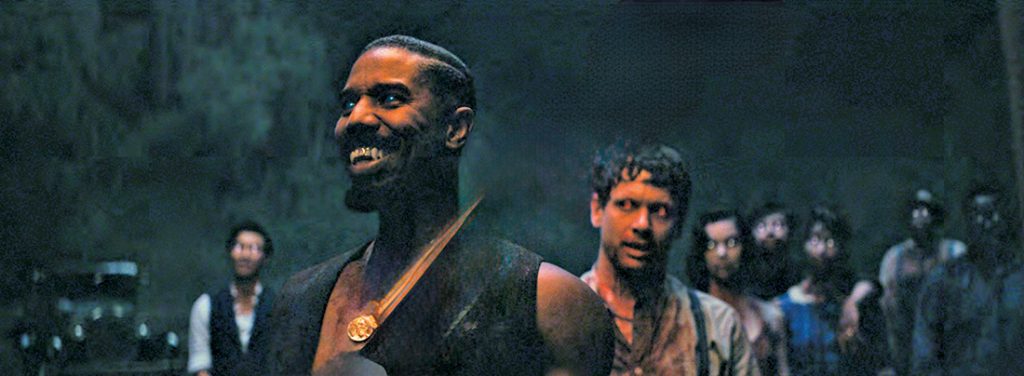
Michael B. Jordan fully committed to his hair style, knowing it would help define his twin characters. For the slick 1930’s gangster look, Jove Edmond, his personal barber, cut Michael’s hair into a bald fade. Terry then softened his curl pattern with a texturizer and sculpted a precise conk with a sharp side part, locked daily under the dryer. A rattail comb and Illustrator Scalp Reel palette refined the details. And, since he played twins, it was agreed that this single hair style would be used for both characters for the sake of time-saving efficiency. For his 1990’s flash-forward scenes, Terry used his natural hair grown to three inches, sculpted into a classic high-top fade with strong-hold hairspray. His routine during filming included daily shampoo and conditioning to keep his hair healthy.
Hailee Steinfeld embraced a dramatic change as well. After reviewing the concept boards, she cut her long hair into a Lauren Bacall-inspired bob and returned to her natural chocolate brown color. Foregoing a wig gave her role striking authenticity.
Other cast members had equally thoughtful hair transformations. Miles Caton (Sammie) had his locks combed out into a natural Afro. Delroy Lindo (Delta Slim) wore a wig by Victoria Woods, textured and sparse for period accuracy. Jayme Lawson (Pearline) wore a wig styled into an updo. And, for Wunmi Mosaku (Annie), the hair team created sharecropper women’s parting patterns, and honored them with daily moisture for sheen and softness.
No essay on the film would be complete without touching on the antagonist, the evil Irish vampire, Remmick, played by Jack O’Connell. The hair for his character was styled to convey sweat and the feel of a hat just being removed. The bad guy also went through several physical transformations, all at the skillful hands of Fontaine’s special effects make-up team. But it was the character’s death that was their biggest shared achievement: the combination of being smashed with a guitar, staked, and finally incinerated by sunlight called for a collaborative effort between all of the film’s departments.
Coogler pitched the idea of a guitar tearing open Remmick’s face to reveal molar fangs. The team crafted dentures that overlapped O’Connell’s face, over which a multipiece silicone appliance make-up was applied. They engineered it so the guitar resonator could actually be pulled from his head on camera. Underneath a partial wig, they hid a fiberglass plate with magnets to attach to the resonator, blood rigs, and even smoke tubing. All engineered to be resettable between takes.
For the burning effect, they built a body suit that covered a harness with a stake to make the character look as if he were impaled. They shot the final death scene with IMAX cameras during a real sunrise with O’Connell submerged up to his waist in water. A second, more extreme suit on a double carried them through the final moments, where they pushed past realism into something more monstrous with molten lava burns, and talon-like claws unveiling Remmick’s true final form. All-in-all, Fontaine, and his team of 26 make-up effects artists, created more than 80 make-up effects for the film.
Last, all the main artists, Siân Richards, Ken Diaz, Shunika Terry-Jennings, and Mike Fontaine, have gone out of their way to highlight the teamwork that went into this very complex and challenging film, giving credit to the other artists who contributed to their great success.
They are Assistant Department Head Make-up Ned Neidhardt, key make-up artist Allison LaCour, Natalie Young, make-up artist for Delroy Lindo, and make-up artists Lana Mora, Seekie Simon and Lauren Green. The special effects make-up on-set crew: Kevin Wasner, Bailey Domke, Kelsey Berk, and special make-up effects artist Lauren Spencer, Department Head Hair Elizabeth Robinson, key hair stylist Tene Wilder, Sherri B. Hamilton, plus hair stylists Nell Rattler, Jimmie Turner, Jr. and Chazonia Lewis.
If you haven’t already had the pleasure of seeing this artistic triumph, then you are missing out. The teamwork made the dream work, and it is definitely worth a watch. •